Take less
guesswork outside.
Gear decisions are easier when they start with the trip. Get practical about what you carry, what you need and what can stay home.
WITH INTENT
Pack for the day you have.
Choose gear by conditions, distance and how you’ll use it. Start with the trip details before comparing specifications.
Capacity, packed size, setup and ventilation all matter when the forecast changes.
CAMPING BASICS ↗02 / SLEEPBuild a sleep system around conditionsThink through pad insulation, bag fit and the expected low for your trip.
OVERNIGHT KIT ↗03 / FOOTWEARMatch shoes to terrain and distanceFit and traction start with the route surface, load, and your own feet.
HIKING KIT ↗04 / CARRYGet a pack that carries your real loadMeasure torso fit and test the pack with the volume and weight you expect to carry.
PACK FIT ↗05 / COOKKeep camp cooking simplePlan by group size, trip length, fuel rules and the cleanup you’re willing to do.
CAMP KITCHEN ↗06 / LAYERSLayer for movement and changing weatherUse the route forecast and your activity to decide what earns space in the pack.
CLOTHING ↗See how the
small things add up.
Enter your group, trip length, daily water plan, food and base pack weight. The result is a simple planning estimate to help you check your carry.
Check each field: people 1–12, days 1–30, water 0–12 L, food 0–4 kg, base gear 0–50 kg.
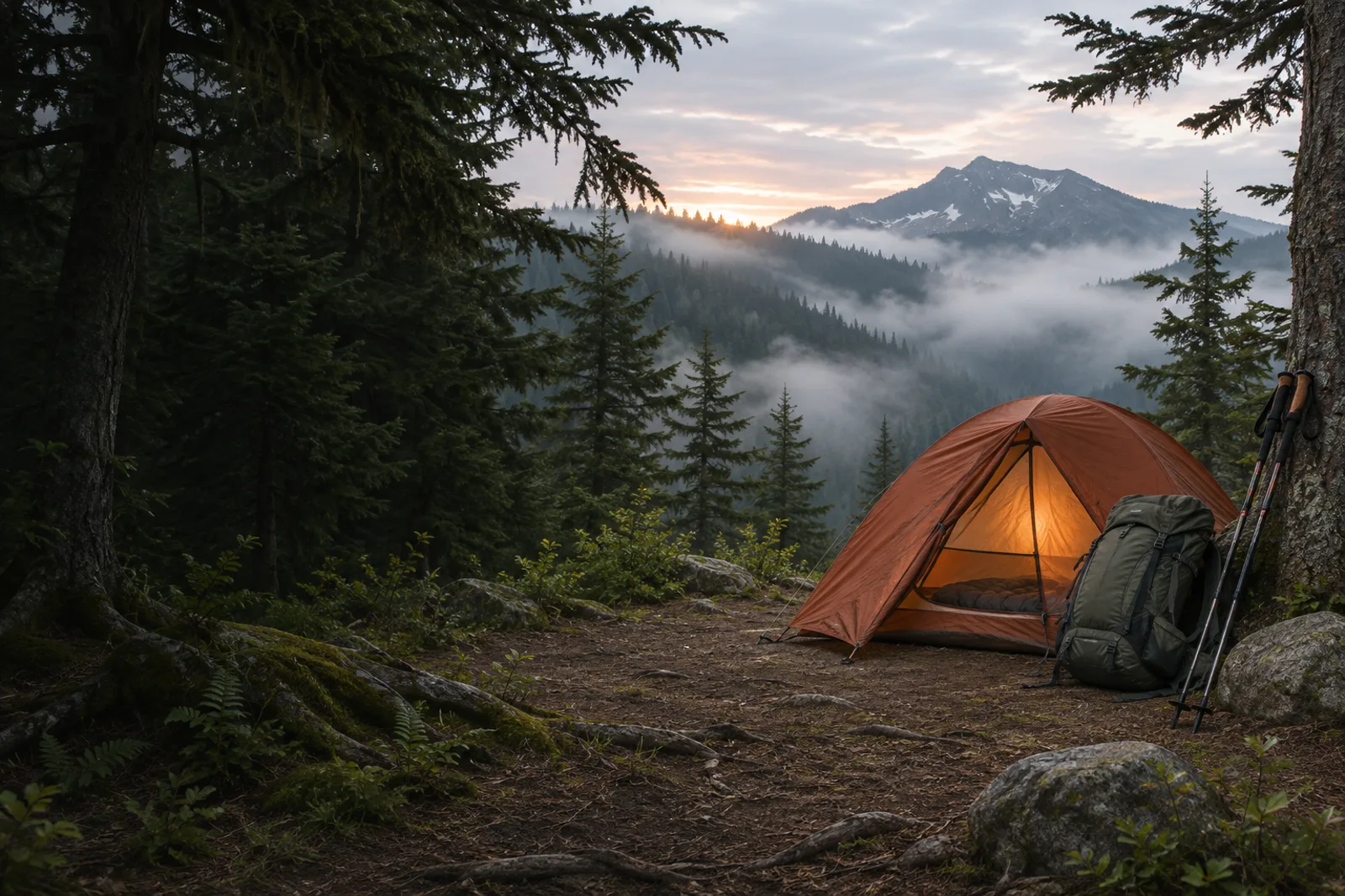
AI-generated illustrative sceneBuild around
the conditions.
A gear list only makes sense alongside the route, weather, group and rules that shape a trip. We focus on the decisions that make a kit safer, easier to carry and more useful over time.
Route before rackDistance, elevation, surfaces and access change what earns space.
Comfort is personalFit and warmth depend on the person, not just a spec sheet.
Sources stay visibleNo invented field tests, prices, credentials or product availability.
Carry what the day calls for.
Use the load planner to organize your own assumptions before you shop.